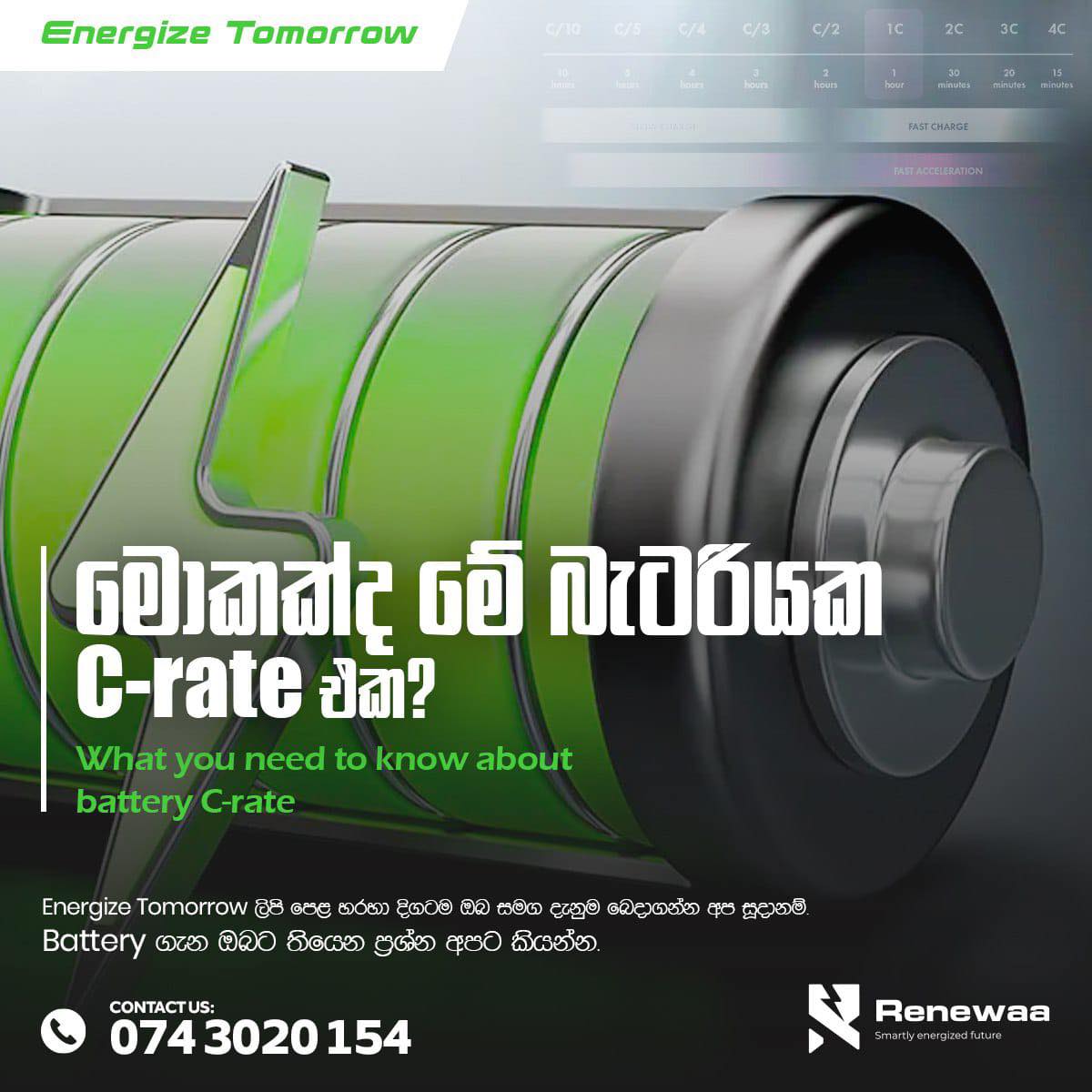
The C-rate of a battery is a measure of its charge and discharge rate capability. It tells us how fast a battery can be charged or discharged relative to its nominal capacity.
The capacity of a battery is often rated at 1C, which is considered the standard reference point. When a battery is rated at 1C, it means that a fully charged battery with a nominal capacity of 1 ampere-hour (1Ah) should be able to provide a continuous current of 1 ampere (1A) for one hour.
In other words, charging/discharging at 1C means the battery can charge/deliver a current of 1A for one hour.
Variations of C-Rates
- C-rates aren't limited to 1C.
If you discharge the same 100Ah battery at 0.5C, it means you're drawing a current of 500mA
(1Ah x 0.5C = 50A), and the battery should last for two hours(1/0.5C = 2hours). This is often referred
to as a two-hour discharge.
On the other hand, if you discharge the battery at 2C, you're drawing 200A from it, but the battery will
last for only 30 minutes.
It's important to note that high discharge rates can lead to reduced discharge times due to increased internal resistance and heat generation. Charging at rates significantly higher than the specified maximum charging rate can also lead to efficiency losses and potential damage to the battery.
Understanding the charging/discharging current is essential to ensure you charge your battery safely and avoid damaging it.